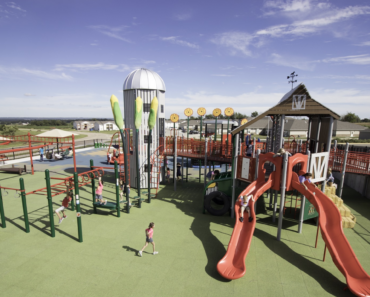
Inclusive playground equipment for schools should do more than provide one accessible ramp or a separate adaptive activity. A strong plan connects children and caregivers to varied physical, sensory, social, imaginative and quiet play experiences throughout the space. The route, surfacing, layout, equipment, shade, seating and maintenance plan all matter.
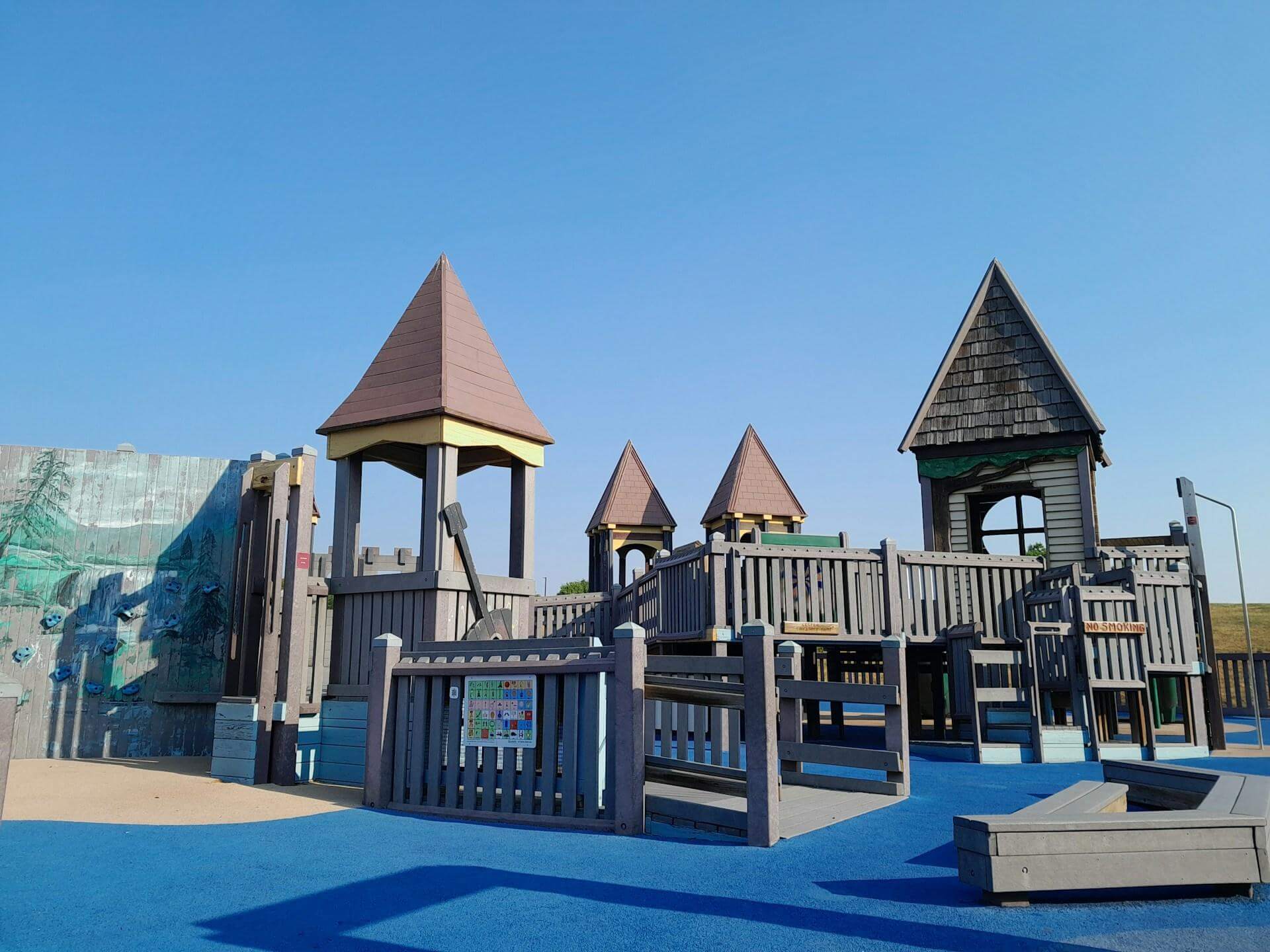
An inclusive school playground begins with connected routes, usable surfaces and varied ways to play. (Photo: Unsplash)
This guide is for parent councils, educators, administrators and community groups planning a new school playground or improving an existing one. It offers a decision framework, not a substitute for the school board’s requirements, local codes or advice from qualified accessibility, playground-design and inspection professionals.
Accessible and Inclusive Are Related, but Not Identical
Accessibility removes barriers so people with disabilities can approach, enter, move through and use a space. Inclusion asks a broader question: can children with different mobility, sensory, communication and cognitive needs participate in meaningful play with their peers?
A playground can meet minimum access requirements yet still isolate children. For example, a ground-level panel at the edge of the site may be reachable, but it does not create shared play if the popular activities are elsewhere. Integrated routes and play opportunities make it easier for children to choose activities and interact rather than being directed to a separate “accessible” zone.
Canada’s current outdoor-spaces accessibility standard says play experiences for children with disabilities should be integrated and similar to those provided for all children. The standard also calls for sensory and active play experiences and accessibility for parents, guardians and caregivers with disabilities.
Start With People, Not a Product Catalogue
Before requesting equipment quotes, form a planning group that includes children, families living with disability, educators, school operations staff and people responsible for supervision and maintenance. If possible, involve an occupational therapist, accessibility consultant or inclusive-play specialist who understands the local context.
Ask children what they enjoy, what they avoid and where they feel excluded. Include students who communicate in different ways, and offer more than one way to participate in the consultation. The Holland Bloorview Inclusive Playgrounds Playbook emphasizes designing with playground users and repeatedly asking who can and cannot play.
Document the needs before naming products. Consider mobility devices, limited reach or grip, low vision, hearing differences, sensory processing, communication needs, fatigue, balance, developmental range and caregiver access. No single component will serve every child, which is why a varied, connected system is more important than a “signature” item.
Confirm the Standards and Approval Path
Canadian school playground requirements can involve provincial or territorial rules, school-board policies, local accessibility requirements, insurer conditions and the current edition of CSA Z614 for children’s playground equipment and surfacing. Ask the board or authority having jurisdiction which standards and approvals apply before design work begins.
Request written documentation showing how the proposed design, equipment and protective surfacing address the applicable requirements. Confirm who is responsible for design review, installation, post-installation inspection and ongoing inspections. Do not rely on a supplier’s general “accessible” or “inclusive” label as proof that the entire site works.
Eight Elements of an Inclusive School Playground
1. A continuous accessible journey
Review the route from the school entrance, parking or drop-off area to the play space. Gates, paths, slopes, thresholds and openings should work for people using wheelchairs, walkers, canes and other mobility devices. Inside the playground, routes should connect entry points, equipment, seating, shade and quiet areas.
2. Usable and protective surfacing
Surfacing must address both impact attenuation and mobility. Loose fill can shift, compact or create resistance, while unitary surfaces can develop gaps, edges or wear. Ask how the surface was tested, how drainage affects it, what daily and seasonal maintenance it needs, and how repairs will be funded. Inspect routes and transfer areas after installation, not just on opening day.
3. Integrated ground-level play
Offer several types of ground-level play along the main circulation route: imaginative panels, music or sound features, tactile activities, social games, sand or water play where appropriate, and movement activities. Avoid grouping every accessible component in one corner.
4. More than one way to reach and use elevated play
Ramps, transfer systems and connected decks serve different users. Work with a qualified designer to determine the mix required for the site and the applicable standard. Provide interesting activities along routes so access is part of play rather than only a path to a destination.
5. Varied movement experiences
Consider swings with different support options, low and graduated climbing challenges, rocking, spinning, sliding and balancing. Provide choices in speed, body position, support and social participation. Equipment should match the intended age and supervision level.
6. Sensory and communication supports
Combine tactile, visual and auditory experiences without making the entire space overwhelming. Communication boards, picture symbols, predictable wayfinding and clear sightlines can support children who communicate differently. Place louder activities thoughtfully and provide alternatives.
7. Quiet space, shade and rest
Include a retreat that is visible to supervisors but separated from the busiest activity. Shade, benches with backs and arms, companion seating, drinking-water access and weather protection make the playground usable for longer periods by children and caregivers with different stamina and sensory needs.
8. Access for adults as well as children
Parents, guardians, educators and support workers may have disabilities. Routes, gates, seating and supervision positions should allow adults to reach children and participate. The Rick Hansen Foundation accessible play-spaces toolkit provides a Canadian planning checklist and recommends professional access advice for site-specific decisions.
A Safer Purchasing Process
Compare complete proposals rather than isolated equipment prices. Give each bidder the same site information and needs statement. Ask for:
- A scaled plan showing routes, use zones, play components, seating and supervision lines
- Applicable standards and compliance documentation
- Surfacing test information, sub-base and drainage details
- Installation qualifications and post-installation inspection arrangements
- Warranty terms, exclusions and expected service life
- Inspection and maintenance instructions, replacement-part availability and repair response times
- References for comparable school projects that have been in use for several years
- A total-cost estimate covering site preparation, freight, installation, surfacing, inspection, maintenance and future repair
Visit completed sites when possible. Observe transitions between surfaces, congestion at popular features, drainage, loose or worn material and whether children with different abilities actually share the space.
Plan Safety and Maintenance Before Opening Day
Inclusive design does not replace playground safety work. The plan still needs age-appropriate equipment, protective surfacing, suitable use zones, hazard checks and a documented inspection and maintenance schedule. The current U.S. Consumer Product Safety Commission handbook is not a Canadian legal standard, but it is a useful public reference for purchasers and maintainers reviewing common playground hazards.
Assign responsibility for routine visual checks, operational inspections and annual or specialist reviews according to the board’s rules. Create a reporting process for damage and accessibility barriers. Keep inspection, maintenance and repair records, and close unsafe equipment until it is repaired.
Budgeting and Fundraising Without Losing the Design Goals
Agree on non-negotiable inclusion and safety outcomes before fundraising begins. A lower initial equipment quote can become more expensive when surfacing, drainage, installation, inspection and maintenance are added.
If the full project cannot be funded at once, use a professionally reviewed phased plan so the first phase does not block later routes or components. Grant applications and sponsor proposals are stronger when they describe documented community needs, the standards pathway, the maintenance plan and the outcomes children helped define.
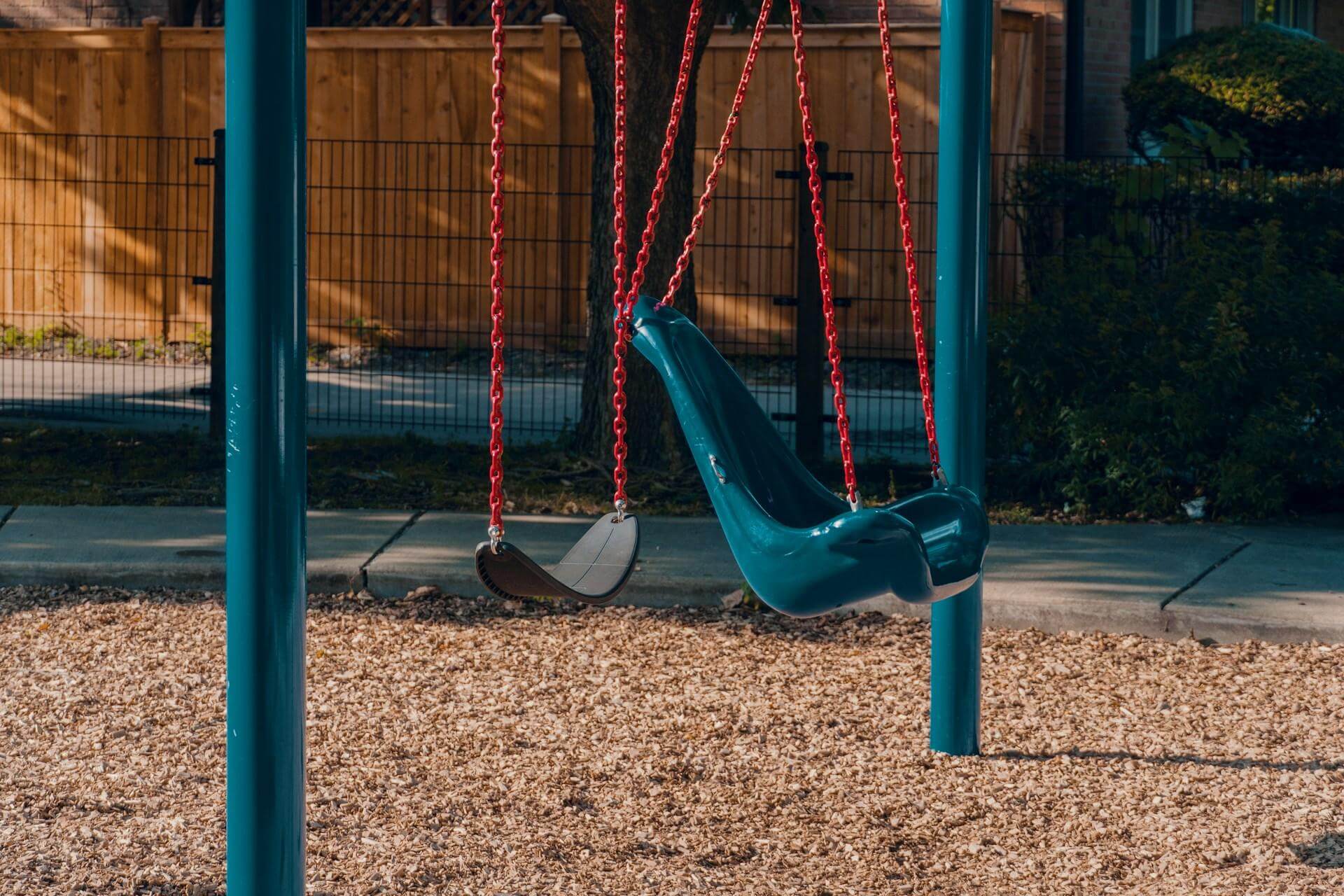
Individual components matter, but routes, surfacing, layout and shared play determine whether the whole space is inclusive. (Photo: Unsplash)
Frequently Asked Questions
Is a wheelchair ramp enough to make a playground inclusive?
No. A ramp can be an important access feature, but inclusion also depends on the surface, route connections, variety of usable play experiences, social integration, communication supports, sensory choices and access for caregivers.
What playground equipment is best for a school?
There is no universal product list. The best mix follows the applicable standards and the needs identified with children, families and school staff. Look for varied ground-level and elevated play, movement choices, imaginative and sensory activities, communication supports, quiet space and accessible routes.
How should a school compare playground suppliers?
Give suppliers the same needs statement and compare full plans, compliance documentation, installation qualifications, surfacing, warranties, maintenance requirements, references and total life-cycle cost. Brand rankings are less useful than site-specific evidence.
Can an existing playground be made more inclusive?
Often, yes, but start with an accessibility and safety assessment. A professionally reviewed phased plan may improve routes, surfaces, ground-level play, seating, shade, communication and sensory options without creating new barriers.
Who should inspect a new school playground?
Follow the school board’s policy and applicable local requirements. Confirm before purchasing who will complete the post-installation inspection and ongoing inspections, what qualifications are required and how deficiencies will be documented and corrected.
The Bottom Line
Good inclusive playground equipment for schools is selected as part of a connected, standards-informed plan—not from a generic “best companies” list. Consult the people who will use the space, confirm the approval path, design the accessible journey, compare complete proposals and fund maintenance from the start. That process gives more children and caregivers a realistic opportunity to arrive, choose, participate and play together.