
If you run your business from a home office, you already know how much your environment affects your focus. You’ve probably fixed your lighting, invested in a comfy chair, and blocked out noise from the street. But there’s one thing a lot of home-based business owners overlook completely: the ceiling fan spinning above their desk.
It sounds small. It isn’t. A fan that’s too loud, too slow, or spinning the wrong direction can quietly chip away at your concentration all day long. And if you’ve been blaming your afternoon slump on coffee or Wi-Fi lag, the real culprit might be right over your head.
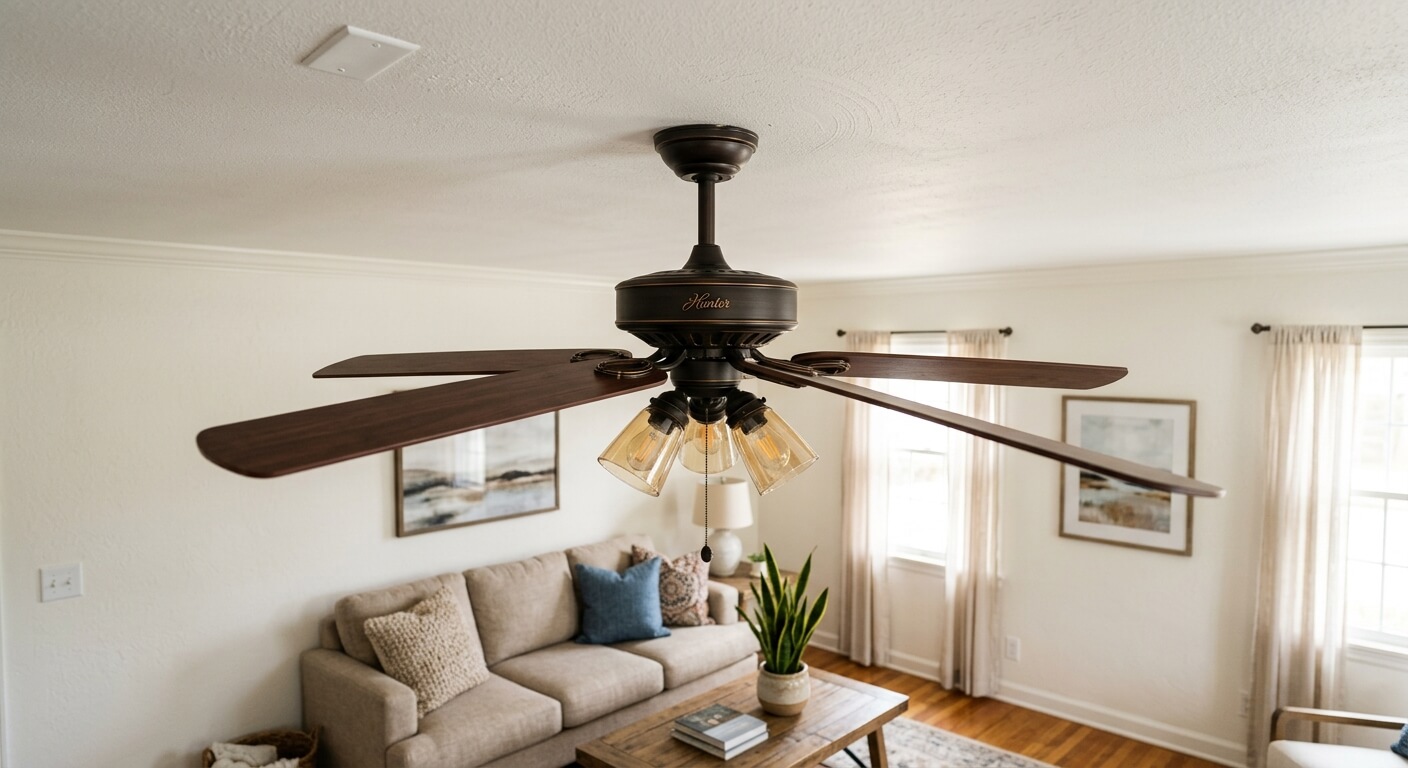
Why Fan Choice Matters More Than You Think
Most people buy a ceiling fan the same way they buy a lamp. They pick whatever looks nice and matches the room. That’s fine for a guest bedroom. It’s not fine for the room where you spend eight hours a day making decisions.
A poorly matched fan creates two problems. First, cheap motors hum or click, and that low background noise builds mental fatigue over time, even if you don’t consciously notice it. Second, an undersized fan in a large office won’t circulate air well, so you end up either too warm to think clearly or reaching for a space heater that dries out the room.
Before you settle on the first fan you see at a hardware store, it helps to slow down and compare your options properly. Take time to review the best ceiling fans at Hunter’s ceiling fan collection, where you can filter by room size, noise level, and airflow. That last part matters more than most people realize. A fan rated for airflow, not just style, will actually keep your office comfortable without turning into background noise that pulls at your attention.
Also think about controls. A remote or wall control lets you adjust speed without interrupting your workflow. Dimming options can help when you need softer lighting later in the day. These small conveniences may seem minor, but they add up when you’re using the office every day.
Your Office Is Part of Your Business Infrastructure
Here’s the mindset shift that helps. Your home office isn’t just a room. It’s part of your business’s infrastructure, the same way plumbing or wiring is. When one small system breaks down, whether that’s a flickering light or a fan that rattles every time it hits a certain speed, it affects your ability to work.
This connects to a bigger truth about running a business from home. Your workspace and your workflow are tied together more closely than most people admit. A well-maintained home tends to produce a calmer, more focused business owner, which is exactly the idea explored in this piece on how successful businesses run like a well-kept home. The logic is simple. If the physical space where you work is neglected, that stress eventually shows up in your output, even if you can’t always trace it back to the source.
So, next time you feel scattered by 2 p.m., don’t just check your task list. Check your thermostat, check your lighting, and yes, check whether your fan is actually helping or quietly working against you.
A comfortable workspace will not solve every productivity problem, but it can remove unnecessary friction. When temperature, lighting, and airflow are working properly, you can focus more energy on the work itself instead of fighting your environment all day.
Small Adjustments That Make a Real Difference
You don’t need to overhaul your whole office to fix this. A few small changes go a long way.
First, flip your fan direction with the seasons. In warmer months, your blades should spin counterclockwise to push air straight down and create a cooling breeze. In cooler months, switch to clockwise on a low setting so warm air near the ceiling gets pulled back down into the room. This isn’t just a comfort trick either. According to guidance on energy-saving cooling habits, this simple adjustment lets you raise your thermostat a few degrees without losing comfort, which is worth knowing whether you’re chasing focus or just trying to cut your energy bill.
Second, pay attention to blade size relative to your room. A fan that’s too small for the space will run louder and less effectively, since it has to work harder to move the same amount of air. A properly sized fan barely makes a sound, which is exactly what you want humming above your desk during a client call.
Finally, don’t ignore how a fan pairs with your lighting. Flickering shadows from mismatched light kits and blade rotation can be surprisingly distracting during video calls or long stretches of screen work.
The Takeaway
Running a business from home means paying attention to details that seem unrelated to business at first glance. Your ceiling fan is one of them. It’s not just decor. It’s part of the environment that either supports your focus or quietly drains it. Take a little time to choose the right one, set it up properly, and adjust it with the seasons. Your future self, deep in a deadline, will thank you.
