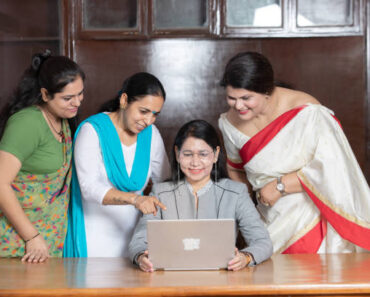
Choose interview clothing that fits the workplace and helps you feel comfortable and prepared.
Wondering what to wear to a job interview? The best interview attire for women is clean, comfortable, workplace-appropriate, and polished enough to keep the focus on your qualifications. You do not need an expensive wardrobe or a rigid, old-fashioned uniform.
Start with the employer’s dress code, the role, the interview format, and any safety requirements. Then choose a simple outfit that fits well and lets you sit, walk, and speak confidently.
Quick answer: If you are unsure, wear a blouse, button-down shirt, or neat knit top with tailored trousers or a knee- or midi-length skirt. Add a blazer or cardigan when the role is client-facing or the workplace is formal. Finish with clean, comfortable shoes and understated accessories. An employer’s specific instructions always take priority over a general guide.
How to Choose Interview Attire for Women
Before deciding between a suit, dress, trousers, or smart-casual outfit, learn what “professional” means at that particular workplace.
- Review the employer’s website and social channels. Team photos, recruiting videos, and event photos can reveal the everyday dress code.
- Consider the role. A bank, law office, school, restaurant, design studio, construction company, and technology startup may have very different expectations.
- Ask when the dress code is unclear. A recruiter or human-resources contact can tell you whether the interview is casual, business casual, business professional, uniform-based, or safety-sensitive.
- Plan for the setting. Account for the weather, walking distance, public transit, stairs, and how long you may be seated.
- Choose comfort over novelty. An interview is not the ideal time to test shoes that pinch, a jacket that restricts movement, or an outfit that requires constant adjustment.
Current guidance from Indeed’s career-advice team similarly recommends researching the company dress code, preparing an outfit in advance, and choosing clothing that suits the season and setting.
Interview Outfit Ideas by Workplace Dress Code
Use these formulas as starting points, not rules. Adjust the colour, cut, layers, footwear, and accessories to your personal style, cultural dress, mobility needs, and the employer’s expectations.
Casual or creative workplace
For a casual office, retail setting, creative studio, or startup, aim for intentional rather than overly formal.
- Tailored trousers, chinos, or dark, clean jeans if the company clearly wears denim
- A blouse, button-down shirt, polo, fine-knit sweater, or polished plain top
- A cardigan, structured overshirt, or relaxed blazer
- Clean loafers, flats, boots, or minimalist sneakers if they suit the workplace
Avoid assuming that “casual” means anything goes. Clothing should still be clean, in good repair, and suitable for meeting a potential manager or client.
Business-casual workplace
Business casual is common in offices, education, nonprofit organizations, customer service, and many hybrid workplaces.
- Dress trousers, an office-appropriate skirt, or a simple dress
- A blouse, button-down shirt, polished knit top, or sweater
- An optional blazer, cardigan, or other structured layer
- Loafers, flats, ankle boots, or a comfortable low heel
A coordinated outfit is more important than a particular colour. Navy, charcoal, black, cream, brown, and muted shades are easy to combine, but a thoughtfully chosen brighter colour or pattern can also look professional.
Business-professional or formal workplace
For finance, law, senior leadership, government, consulting, and other formal or client-facing roles, a more structured outfit is often appropriate.
- A coordinated trouser suit or skirt suit with a blouse or knit shell
- A tailored dress with a jacket or blazer
- Polished loafers, flats, boots, or heels you can walk in comfortably
- A neat bag or portfolio that can hold your documents without feeling overfilled
Harvard’s Mignone Center for Career Success also provides a concise resource on business-professional attire for interviews and career fairs when a formal corporate standard is expected.
Healthcare, trades, laboratory, and field roles
For practical or safety-sensitive jobs, choose neat clothing that respects the work environment. Closed-toe shoes may be required, and loose jewellery or flowing garments may be unsafe around equipment. Do not arrive in scrubs, a uniform, personal protective equipment, or work boots unless the employer requests them or the interview includes a practical assessment.
If there is a site tour, ask in advance about footwear, hair restraint, fragrance restrictions, and other safety rules. For a clinical role, see our focused guide to what to wear to a nursing interview.
What to Wear for a Virtual Interview
Dress for a video interview with the same care you would use in person. A complete outfit helps you stay prepared if you need to stand up, adjust equipment, or move to another room.
- Choose a top that contrasts with the background without creating glare.
- Test small patterns on camera; tight stripes and checks can shimmer on screen.
- Keep jewellery quiet enough that it will not strike the microphone or distract from your answers.
- Check the camera angle, lighting, sound, and internet connection while wearing the outfit.
- Keep a backup layer nearby in case the room temperature changes.
Comfort, Accessibility, and Personal Style Matter
Professional clothing should not require you to hide your identity or ignore your needs. Religious and cultural dress, natural hair, mobility aids, sensory-friendly clothing, flat shoes, adaptive fastenings, and gender-expansive styles can all be professional.
Choose an outfit that lets you breathe comfortably, use any mobility aid safely, and remain seated without pulling or pinching. If you need an accommodation for the interview itself, contact the employer in advance when practical. Your qualifications and the conversation should remain the centre of the interview.
Personal style is welcome when it fits the setting. A coloured blouse, patterned scarf, distinctive glasses, or favourite accessory can help you feel like yourself. The goal is not to become invisible; it is to avoid spending the interview worrying about your clothing.
What Not to Wear to an Interview
There is no universal list of forbidden clothing. A creative agency, warehouse, hotel, law firm, and remote-first startup will not share identical standards. Instead, avoid choices that conflict with the employer’s instructions, the role, or the physical setting.
Common problems include:
- Clothing that is stained, wrinkled, torn, or visibly damaged
- Shoes that are unsafe for a site visit or too uncomfortable to walk in
- Strong fragrance in a scent-sensitive workplace
- Large accessories that make noise, snag equipment, or require frequent adjustment
- Logos, slogans, or graphics that could distract from the conversation
- An outfit that is far more casual than the employer’s stated dress code
Do not reject an otherwise suitable outfit simply because it includes colour, a modest pattern, trousers, flats, or an open neckline. Context, fit, condition, safety, and overall presentation matter more than outdated gender rules.
Night-Before Interview Outfit Checklist
- Try on the complete outfit, including shoes, layers, and accessories.
- Sit, walk, reach, and practise your introduction to check comfort.
- Steam or press anything wrinkled and remove lint or pet hair.
- Check the weather and prepare a coat, umbrella, or alternate footwear.
- Pack a stain-removal wipe, tissues, and any personal-care item you may need.
- Place your resume, portfolio, identification, and questions in your bag.
- Set out a backup top or layer in case of a spill or weather change.
For the rest of your packing list, use our guide to what to bring to an interview.
Frequently Asked Questions About Women’s Interview Attire
Can a woman wear trousers to an interview?
Yes. Tailored trousers, chinos, or dark polished jeans can all work, depending on the employer’s dress code. A trouser suit is also appropriate for most formal interviews.
Is a blazer required for an interview?
No. A blazer is useful for business-professional or client-facing roles, but a polished blouse, sweater, cardigan, structured dress, or button-down shirt may be sufficient in a casual or business-casual workplace.
What colours are best for an interview?
Neutrals such as navy, charcoal, black, cream, olive, and brown are easy to coordinate. You can also wear colour or a restrained pattern when it suits the company and makes you feel confident. Fit and condition matter more than choosing one “correct” shade.
Should I wear heels to an interview?
Only if you want to and can walk comfortably in them. Clean flats, loafers, boots, and other workplace-appropriate shoes are equally valid. Safety and comfort come first.
Should I dress one level above the workplace?
That can be a useful tie-breaker when you are unsure, but it is not a strict rule. Research the employer, consider the role, and ask the recruiter when possible. A neat, slightly polished version of the workplace’s usual dress is often a safe choice.
Choose an Outfit That Supports the Interview
The best interview attire for women does three things: it respects the workplace, supports your comfort, and lets the interviewer focus on your experience. Research the dress code, prepare the outfit early, and adapt it to your needs instead of following rigid fashion rules.
Once the clothing is ready, turn your attention back to the parts that matter most: understanding the role, preparing examples of your work, practising thoughtful answers, and arriving ready to ask good questions.