
Updated August 23, 2026
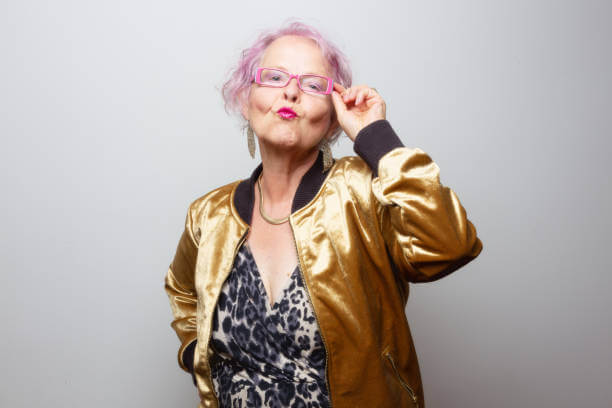
Quick answer: The most versatile short hairstyles for women over 60 with glasses are a textured pixie, a soft tapered crop, a chin-length bob and a layered bixie. The best choice depends less on age than on your hair’s natural texture, density, daily styling time and how the cut sits around your frames.
Glasses are part of the look, not something a haircut needs to hide. A good cut leaves enough room around the temples, keeps the fringe from fighting with the top of the frames and gives you a shape that still works after you wash it at home.
Below are 17 practical ideas, including options for fine hair, curls, grey hair and low-maintenance routines. Use them as a starting point and ask your stylist to adapt the length, layers and fringe to you.
How to choose a hairstyle that works with glasses
Start with four practical questions:
- What does your hair naturally do? Straight, wavy, curly and coily hair create different shapes at the same length. A cut that cooperates with your texture is usually easier to manage.
- Where is your hair most dense? Strategic layers can add movement, but too many short layers may make fine ends look sparse. Your stylist can place volume where it is most useful.
- How much styling do you want? Be honest about whether you prefer air-drying, a quick blow-dry or a more polished routine.
- How do your glasses fit? Bring your everyday frames to the appointment. The temples, frame width and top rim affect how bangs and side pieces fall.
Face-shape rules can be useful for inspiration, but they are not laws. Comfort, texture and personal style matter more than trying to “correct” your features.
17 short hairstyles for women over 60 with glasses
1. Textured silver pixie
A layered pixie creates lift through the crown while leaving soft pieces around the forehead. It pairs especially well with rectangular or cat-eye frames because the airy texture keeps the overall look from feeling heavy. Ask for enough length on top to change the part or add a little definition with a lightweight styling cream.
2. Soft tapered pixie
This version is neat at the nape and around the ears, with a softer top than a close crop. It keeps hair away from the arms of your glasses and can be an easy wash-and-wear choice for straight, wavy or coily textures. A gentle taper also grows out more gracefully than a very sharp undercut.
3. Side-swept crop
A longer top swept to one side creates movement without a full fringe sitting across the frames. It can make a simple short cut look polished with very little product. Ask the stylist to check the fringe both with and without your glasses so it does not fall into your lenses.
4. Bixie cut
A bixie sits between a pixie and a bob. It has the lightness of short hair but keeps more length around the ears and nape. This is a useful transition cut if you want softness around the face or are not ready for a cropped pixie.
5. Classic chin-length bob
A clean bob gives fine or straight hair a strong outline. The ends can be blunt for a fuller appearance or softly graduated for movement. With bold glasses, a simple bob creates balance; with delicate frames, it can be tucked behind one ear for a lighter look.
6. Layered bob for natural volume
Long, restrained layers can help a bob move without sacrificing too much density at the ends. This works well for wavy hair and for anyone who wants shape around the cheekbones. Avoid automatic “more layers equals more volume” advice—placement matters more than the number of layers.
7. Stacked bob
A stacked bob is shorter at the nape and gradually longer toward the face. It creates a rounded silhouette at the back and leaves face-framing length in front. Ask for a subtle stack if you want a softer, more modern result that is easy to grow out.
8. Asymmetrical bob
A slightly longer side adds interest without requiring an extreme cut. The uneven line can look especially striking with clean, geometric frames. Keep the difference modest if you want the style to remain easy to tuck behind both ears.
9. French bob with a light fringe
A jaw-length bob with a wispy fringe can frame both the face and the glasses. The key is keeping the fringe light enough that it does not compete with the top rim. If your frames sit high, ask for a fringe that can sweep to the side.
10. Curly crop
A rounded short cut lets natural curls create the shape. Removing bulk selectively—not flattening every curl to one length—can make the silhouette easier to manage. Have the stylist account for shrinkage and cut with your normal curl pattern in mind.
11. Curly bob
A bob that falls between the ear and chin keeps curls visible while remaining light enough to frame glasses. A few face-framing curls can soften bold frames, while a defined side part adds structure. Ask how the cut will sit on your usual wash day, not only after a salon blowout.
12. Short shag
A short shag uses soft layers and a broken-up outline for movement. It suits wavy or textured hair and works with many frame shapes because it is intentionally relaxed. Keep the shortest layers long enough to avoid constant styling around the glasses.
13. Feathered crop
Fine feathering around the crown and sides gives short hair motion without a rigid shape. It can work with smaller frames because the cut does not overwhelm them. Use a light touch with product so the layers remain separated rather than stiff.
14. Slicked-back pixie
For a dressier variation, direct the top and sides away from the face with a small amount of flexible-hold product. This puts statement glasses front and centre. Avoid pulling tightly; the goal is a smooth direction, not tension at the hairline.
15. Soft faux hawk
A longer centre section with shorter sides gives a pixie an edgier shape. It can be worn subtly for daytime and lifted more for an event. The softer version is easier to maintain than a skin fade and still leaves room to change the direction of the top.
16. Layered lob
If you prefer more length, a lob that sits between the chin and shoulders offers flexibility without feeling like long hair. It can be worn straight, wavy or tucked behind the ears. Long face-framing pieces should clear the hinges of your glasses rather than catching on them.
17. Shoulder-length waves
Short hair is not mandatory after 60. Soft shoulder-length waves can be just as practical when the ends are healthy and the shape is balanced. A side part or a few long layers can open the face while keeping enough length for a low ponytail.
Matching hair with different glasses frames
Bold or oversized frames
Keep at least one element of the haircut simple. A clean bob, tapered pixie or smooth side-swept crop gives colourful or oversized frames room to stand out. If you also want big curls or strong texture, keep the fringe lighter around the brows.
Round frames
Angular lines are an option, not a requirement. A side-swept pixie or asymmetrical bob can create contrast, while a rounded curly crop produces a softer, cohesive look. Choose the effect you prefer.
Rectangular and square frames
Soft waves, feathered layers and curved bobs can balance the straight lines of angular frames. A sharp pixie can also work if you prefer a graphic, confident style.
Delicate or rimless frames
Fine frames leave more visual space for texture. Curly bobs, shags and layered lobs can take the lead without making the face feel crowded.
Best options for fine or thinning hair
Fine hair describes the diameter of each strand; thinning hair means reduced density. They are not the same, and the best cut can differ.
- For fine but dense hair, a blunt bob or bixie can preserve a strong-looking perimeter.
- For lower density, a soft pixie or lightly layered bob may reduce the contrast between fuller and sparser areas.
- A side part, gentle root lift and lightweight products can create movement without coating the hair.
- Avoid very tight ponytails or styles that repeatedly pull at the hairline.
Hair changes can have many causes. The American Academy of Dermatology notes that hair growth commonly slows with age, but hereditary hair loss, medical conditions, medications and tight styles are among other possibilities. If loss is new, sudden, patchy or worrying, seek an assessment instead of relying on a haircut or supplement. See the AAD’s overview of hair-loss causes.
Low-maintenance hair care after 60
A low-maintenance cut still benefits from gentle care. The AAD’s healthy-hair guidance recommends choosing products for your hair type, washing according to how oily or dirty the scalp becomes, applying shampoo mainly to the scalp, using conditioner and limiting excessive heat.
- Tell your stylist how you normally dry and style your hair.
- Use low or medium heat and a heat-protectant product when appropriate.
- Detangle gently, working from the ends upward.
- Place rinse-out conditioner where your texture needs it; fine straight hair may need it mainly on the ends, while dry or curly hair may benefit through more of the length.
- If you colour or chemically treat your hair, follow the product directions and discuss damage or scalp irritation with a qualified professional.
What to ask for at the salon
Bring your everyday glasses, two or three reference photos and a realistic description of your routine. Then ask:
- Where will the fringe sit when I put on my glasses?
- Will the side pieces catch under the frame arms?
- How will this cut air-dry with my natural texture?
- Which areas need regular trimming, and how often?
- What is the simplest way to recreate the shape at home?
A useful final check is to put your glasses on before the stylist finishes. Look forward, turn your head and tuck the sides behind your ears. Small adjustments at this stage can make the cut far easier to live with.
Frequently asked questions
What is the easiest short hairstyle for a woman over 60 with glasses?
A soft tapered pixie or a chin-length bob is often simple to manage, but the easiest cut is the one that works with your natural texture and preferred drying routine.
Do bangs work with glasses?
Yes. Wispy, side-swept or curtain-style bangs can work well. The fringe should be cut while you are wearing your usual frames so it does not sit awkwardly on the top rim or fall into the lenses.
What hairstyle makes fine hair look fuller?
A blunt bob, bixie or softly textured pixie can preserve a strong outline. Heavy layering can make fine ends look thinner, so ask for targeted rather than automatic layers.
Can women over 60 wear long hair with glasses?
Absolutely. Age does not determine a maximum length. Shoulder-length waves or a layered lob can be practical choices when the condition of the ends and your maintenance routine support them.
Should glasses match hair colour?
They do not need to match. You can echo your hair’s undertone for a quiet look or choose contrast for a stronger statement. Comfort and frame fit are more important than a colour rule.
How often should a short haircut be trimmed?
There is no universal schedule. Close tapers and sharp pixies usually show growth sooner than soft bobs or shags. Ask your stylist what interval will preserve the specific shape you choose.
Final takeaway
The best hairstyles for women over 60 with glasses make room for both your frames and your real routine. Start with texture, density and maintenance, then choose the pixie, bob, crop, curl or longer shape that feels most like you. Bring the glasses you actually wear to the salon and judge the cut by how well it works at home—not by an age rule.
