
Updated August 23, 2026
A stairlift can help someone continue using more of their home when stairs have become painful, tiring or unsafe. It is not automatically the right answer for every person or staircase, though. A useful decision starts with the person’s ability to transfer safely, the layout of the home and the risks that will remain after the lift is installed.
The Public Health Agency of Canada identifies stairs as one of the more hazardous areas in a home and recommends looking at lighting, handrails, clutter and other fall risks together. Think of a stairlift as one part of an aging-in-place plan—not a guarantee against falls or a substitute for professional advice.
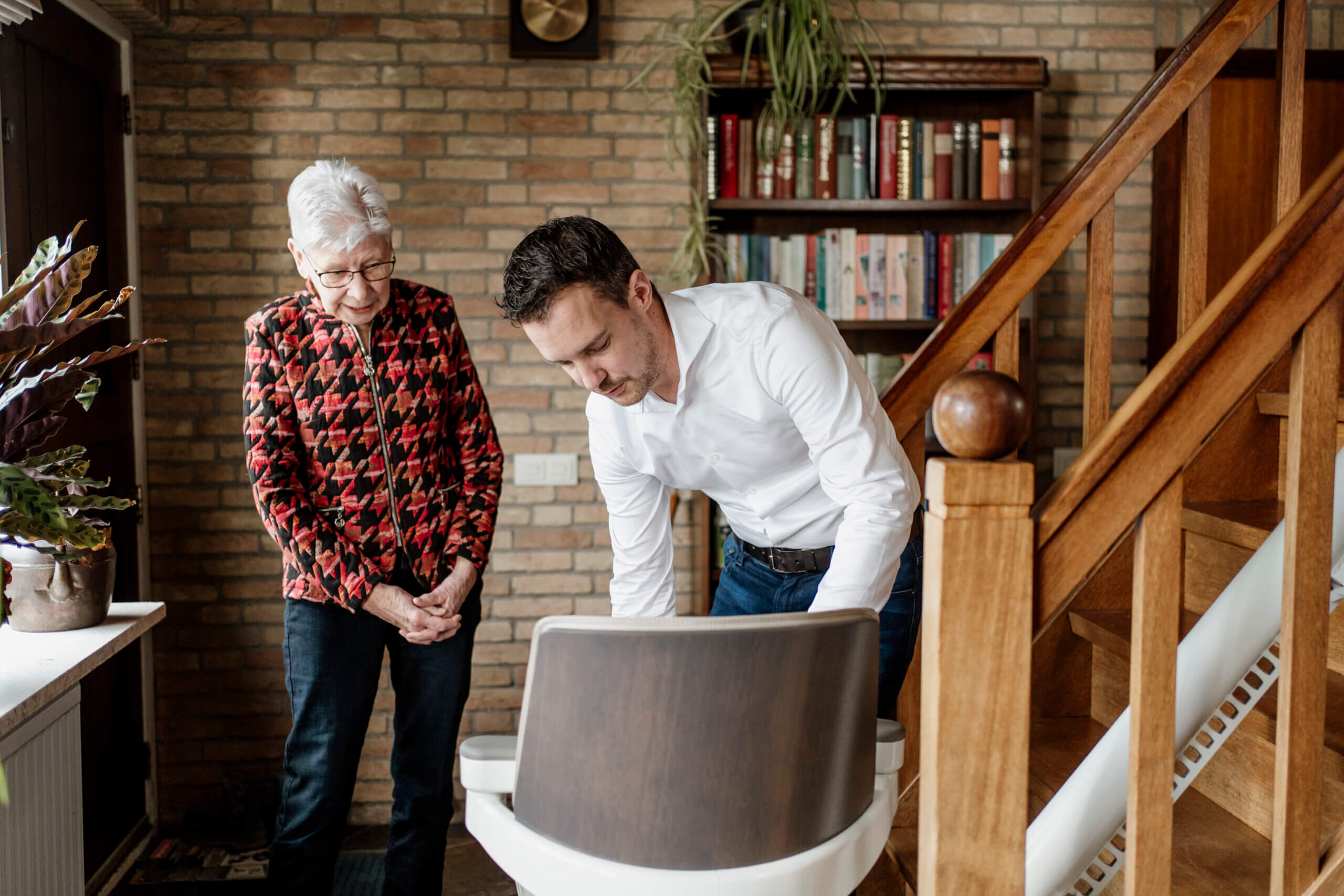
When does a stairlift make sense?
A stairlift may be worth assessing when a person can sit securely in the chair and get on and off at both landings, but climbing a full flight has become difficult. It can reduce exposure to the repeated step-up and step-down motion that causes trouble for some people.
Before shopping, consider these questions:
- Can the person transfer onto and off the chair safely at both ends?
- Can they use the controls, seat belt and swivel mechanism consistently?
- Is there enough space at each landing to approach and leave the chair without standing close to an open staircase?
- Will another household member still be able to use the stairs safely?
- Does the person use a wheelchair or walker that will need to be available on both floors?
- Are there balance, vision, cognitive or medical concerns that call for an assessment by an occupational therapist or another qualified health professional?
A seated stairlift requires the user to transfer. Someone who cannot do that safely may need a different solution, such as a platform lift, a main-floor living arrangement or additional personal support.
Start with a home and mobility assessment
A sales consultation measures the staircase and explains products. It is not the same as independent advice about the person’s functional needs. When safety or mobility is uncertain, an occupational therapist or other qualified professional can assess the entire trip: approaching the stairs, transferring, riding, leaving the chair and moving through the next floor.
The assessment may also identify simpler changes that should be made whether or not a lift is installed. Canada’s home-safety guidance recommends good lighting, uncluttered steps, non-slip surfaces and solid handrails. Those measures remain important because a stairlift does not address other fall hazards in bedrooms, bathrooms, entrances or hallways.
What the installer should measure
Stairlifts usually run on a rail fixed to the stair treads rather than the wall. Straight stairs can often use a standard rail cut to length. Curved, spiral and multi-landing stairs generally require a rail designed for the specific route.
A written survey should cover more than the length of the stairs:
- stair width and the clear walking space left when the chair and footrest are folded;
- turns, intermediate landings, doors, radiators and other obstructions;
- headroom and knee clearance throughout the trip;
- safe parking and transfer space at the top and bottom;
- the user’s height and weight relative to the model’s rated capacity;
- the location of electrical power and how the batteries charge;
- whether a hinged or retracting rail is needed near a doorway;
- any local permit, inspection or building requirements that apply.
Ask the installer to explain the applicable manufacturer instructions and provincial or municipal requirements. Keep the completed survey, model number, warranty and installation paperwork.
Stairlift safety features to compare
Features vary by model, so compare them in writing rather than assuming every chair includes the same equipment. Useful items to ask about include:
- a seat belt that is easy for the user to fasten;
- a swivel seat that locks securely in the riding and transfer positions;
- a footrest and carriage sensors that stop the lift when they meet an obstruction;
- call-and-send controls at both landings;
- battery operation during a household power outage;
- a key or control lock if children or visitors could use the lift;
- a rated capacity suitable for the intended user;
- clear fault indicators and a reachable local service contact.
The installer should demonstrate every control and watch the intended user complete safe transfers. Ask what to do during a power failure, how to park the chair for charging and how another person can summon it from the opposite floor.
New, refurbished and rental stairlifts
A refurbished stairlift can reduce the equipment cost, but “used” is not a safety standard. The chair, drive, batteries and rail need to be compatible with the home and inspected by a qualified technician. A curved rail built for another staircase may not be reusable, while some straight rails can be resized.
For a refurbished model, request:
- the model age, service history and work completed during refurbishment;
- confirmation that replacement parts and batteries remain available;
- a written parts-and-labour warranty;
- the same site survey, installation and user training offered with a new lift;
- clear costs for maintenance, removal and any future move.
Rental can make sense for short-term recovery or when future needs are uncertain. Compare the installation, monthly, service and removal charges with the full purchase price. Curved installations are less likely to fit a simple rental model because the rail is usually customized.
How to compare quotes and providers
Obtain more than one written quote when possible. Each quote should separate the chair, rail, installation, electrical work, optional features, warranty, maintenance and removal costs. It should also state how long service calls usually take and who performs warranty work.
Ask for proof of business insurance, technician qualifications, manufacturer authorization where applicable and recent references. Check whether the company services the equipment it sells or relies on a third party. A seller that carries several brands may offer more choices, but it still has a commercial interest; truly independent functional advice comes from a professional who is not being paid to sell the lift.
Canadian tax-credit basics
Some stairlift expenses may qualify for federal tax relief, but eligibility depends on the person, the home, the equipment and the tax year.
The Canada Revenue Agency says the Home Accessibility Tax Credit can apply to eligible, enduring renovations that improve access, mobility or safety for a qualifying individual. The qualifying individual must generally be age 65 or older at year-end or be eligible for the Disability Tax Credit. The current annual eligible-expense limit is $20,000, subject to the CRA’s detailed rules.
The CRA’s medical-expense guidance also lists a power-operated guided chair installation designed solely for a stairway. Do not assume that every quote qualifies or that the same expense can be used for more than one claim. Check the rules for the installation year, keep itemized invoices and receipts, and consult the CRA or a qualified tax professional for your circumstances.
Safe use and ongoing maintenance
Use the lift only as the manufacturer and installer instruct. Keep the seat belt fastened, place feet on the footrest and make sure the swivel seat is locked before moving. Do not carry another person, heavy parcels or a pet on the chair unless the manufacturer specifically allows it.
Keep the staircase and landings clear even when obstruction sensors are present. Arrange service if the lift develops unusual noises, intermittent stops, warning lights or charging problems. Follow the maintenance schedule and do not bypass a safety device to keep the lift running.
Other aging-in-place changes still matter
A stairlift addresses one route through the home. A broader plan may include brighter lighting, switches at both ends of the stairs, handrails on both sides, secured floor coverings, grab bars, accessible storage and a safer bathroom. The Public Health Agency of Canada’s home-safety guide provides room-by-room checks, while CMHC’s aging-in-place resources help families consider housing and accessibility decisions more broadly.
Frequently asked questions
Does a stairlift prevent falls?
It can reduce the need to walk up and down one staircase, but it cannot eliminate fall risk. Safe transfers, clear landings, lighting, handrails and conditions elsewhere in the home still matter.
How much does a stairlift cost in Canada?
The total depends on whether the staircase is straight or curved, rail length, capacity, options, electrical work and service coverage. Compare itemized site-specific quotes instead of relying on a generic advertised price.
Can a used stairlift be safe?
It can be a reasonable option when the model and rail fit the home, replacement parts are available and a qualified technician inspects, installs and warrants it. A used chair should not be treated as automatically equivalent to a new one.
Can a stairlift be claimed on a Canadian tax return?
Some installations may qualify under the Home Accessibility Tax Credit or medical-expense rules, depending on the facts and the tax year. Review current CRA guidance and retain detailed invoices; this article is general information, not tax advice.
What if the user cannot transfer from a wheelchair?
A seated stairlift may not be suitable because it requires a safe transfer at both landings. Ask a qualified professional to assess alternatives such as a platform lift, a main-floor setup or other support.
